
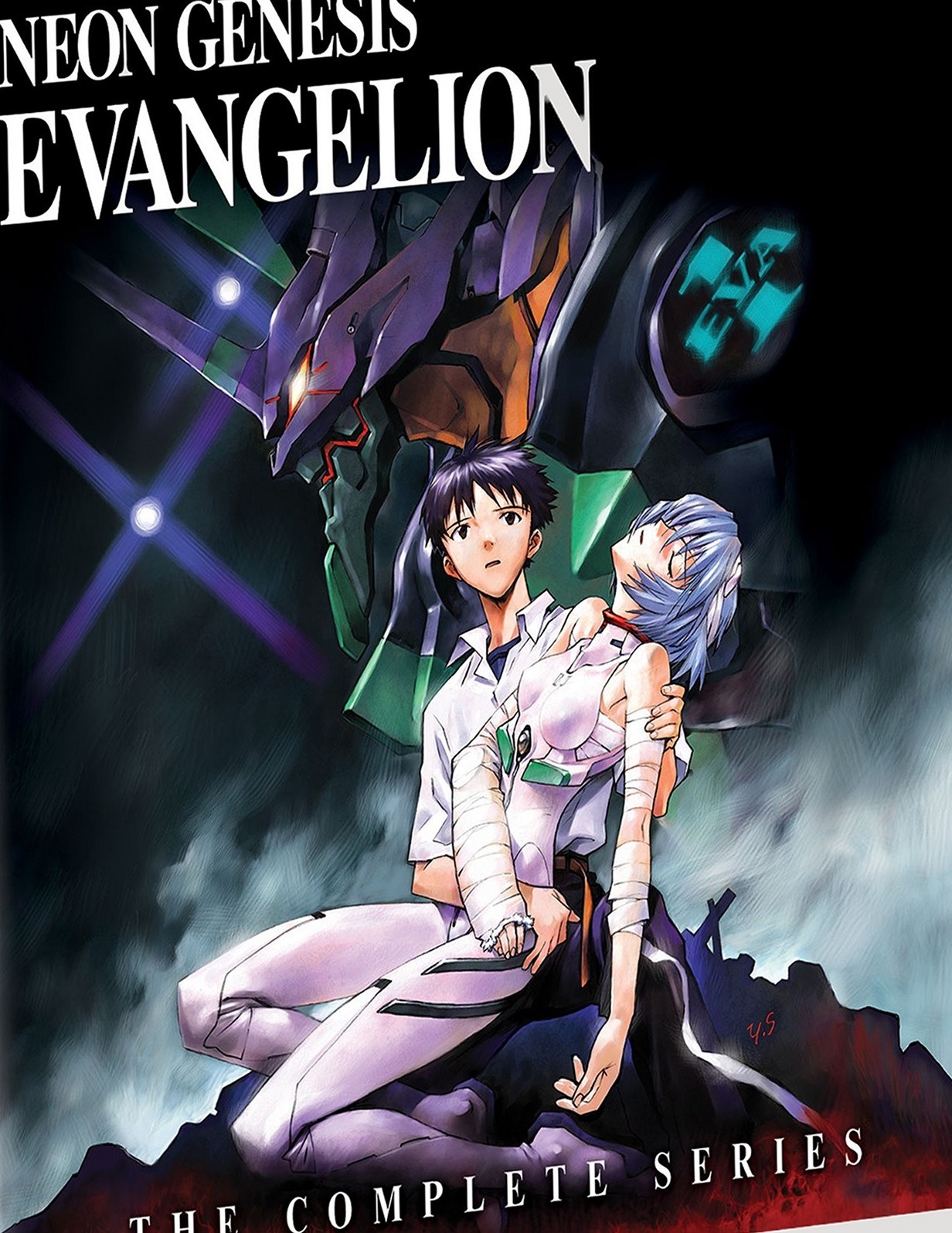
Neon Genesis Evangelion
Get in the robot, Shinji. It will not fix anything.
Last updated: 10 November 2026
Neon Genesis Evangelion is a 26 episode mecha series from Gainax and Tatsunoko Production, created and directed by Hideaki Anno, first aired in Japan in 1995. Fourteen year old Shinji Ikari pilots the giant Evangelion Unit-01 against the Angels attacking Tokyo-3. People watch it because the robot battles slowly give way to one of the rawest portraits of depression, duty and the need to be loved ever put in anime. Its story is completed by The End of Evangelion and retold in the four Rebuild films.
About Neon Genesis Evangelion
Fifteen years after Second Impact destroyed half the world, beings called Angels are attacking the fortress city Tokyo-3. Only teenagers can pilot NERV's giant Evangelion units, so commander Gendo Ikari summons the son he abandoned, fourteen year old Shinji, and orders him into Unit-01. Shinji, the silent Rei and the proud Asuka hold the line while the adults around them pursue secret plans for the future of humanity. Neon Genesis Evangelion is a 26 episode robot series that turns, episode by episode, into a landmark study of depression, family and the fear of other people.
Neon Genesis Evangelion is a TV anime from 1995, first released in Fall 1995. It belongs to the Sci-Fi and Drama and Action genres and is listed as a completed series. The summary above is written by the AnimeYug team in our own words.
Official Trailer
Story & Plot
The year is 2015, fifteen years after a global cataclysm called Second Impact melted Antarctica and killed half of humanity. In the fortified city of Tokyo-3, the paramilitary organisation NERV fights beings called Angels with Evangelions, huge biomechanical weapons that can only be piloted by fourteen year olds. Shinji Ikari arrives because his father Gendo, NERV's commander, has finally sent for him. Not to reconcile. To pilot.
Shinji moves in with his commanding officer, the cheerful, hard drinking Misato Katsuragi, and fights beside two other children: Rei Ayanami, who barely seems to live in her own body, and Asuka Langley Soryu, a prodigy from Germany who has built her entire self worth on being the best pilot. The early episodes play like a classic robot show with better jokes and sadder silences. Then the Angels stop attacking the city and start attacking the pilots' minds.
Under the battles sits a machine of secrets. What the Evangelions really are, what Rei is, what Gendo and the committee called SEELE each intend to do with the Angels and with humanity's souls, all of it converges on the Human Instrumentality Project. The television series ends inside its characters' heads, in two episodes that remain among the most debated in television. The End of Evangelion shows the same ending from outside, in full apocalyptic detail. A generation later, Anno returned with the Rebuild films and gave Shinji, and himself, a different answer.
Story Arcs & Episode Guide
The Neon Genesis Evangelion anime is split into story sagas. Here is every saga in order, with its episodes and years.
| Arc | Episodes | Years | About |
|---|---|---|---|
| Shinji Arrives: The First Angels | Episodes 1 to 7 | 1995 | Shinji reaches Tokyo-3, pilots Unit-01 against the Third and Fourth Angels, and moves in with Misato. Rei, the First Child, is a quiet mystery at the edge of every episode. |
| Asuka and the Escalating War | Episodes 8 to 19 | 1995 to 1996 | Asuka arrives from Germany and the battles grow stranger and harder. The action peaks here, and so do the first serious cracks in every pilot. |
| The Descent | Episodes 20 to 24 | 1996 | The Angels start attacking the pilots' minds instead of the city. Secrets about Rei, the Evas and NERV come out, and Kaworu arrives with the kindest and cruellest offer Shinji has ever had. |
| The Television Ending | Episodes 25 to 26 | 1996 | The famous final two episodes move inside the characters' heads for the Human Instrumentality Project. The End of Evangelion tells the same ending from the outside. |
Why Watch Neon Genesis Evangelion
- Starts as a monster of the week robot show and quietly becomes a study of depression and connection.
- Hideaki Anno rebuilt the series around his own experience of depression, and it shows in every episode.
- Shiro Sagisu's score mixes orchestra, choir and silence to unforgettable effect.
- Two endings exist, the television one and The End of Evangelion, and fans still argue productively about both.
- The Rebuild films give the story a second, more hopeful pass, finished in 2021.
Who Is It For?
Evangelion is for older teens and adults. It contains giant robot violence, psychological breakdown, hospital and war imagery, some sexual content and heavy themes of depression and abandonment. The final episodes and The End of Evangelion are intense even by adult standards.
Main Characters
View all characters →Voice Actors
The Japanese voices behind the main characters of Neon Genesis Evangelion.
- Shinji IkariThird Child, pilot of Evangelion Unit-01Japanese voiceMegumi Ogata
- Rei AyanamiFirst Child, pilot of Evangelion Unit-00Japanese voiceMegumi Hayashibara
- Asuka Langley SoryuSecond Child, pilot of Evangelion Unit-02Japanese voiceYuko Miyamura
- Misato KatsuragiNERV operations director and the children's guardianJapanese voiceKotono Mitsuishi
- Gendo IkariCommander of NERV, Shinji's fatherJapanese voiceFumihiko Tachiki
- Kaworu NagisaFifth Child, sent by SEELEJapanese voiceAkira Ishida
Staff & Production
- Original Creator
- Hideaki Anno
- Animation Studio
- Gainax and Tatsunoko Production
- Director
- Hideaki Anno
- Music
- Shiro Sagisu
- Character Design
- Yoshiyuki Sadamoto
Manga & Source Material
Evangelion is an anime original, planned at Gainax as a return to giant robot adventure and then overtaken, on screen, by its creator's inner life.
- An original anime created by Hideaki Anno at Gainax; it was not adapted from a manga
- Character designer Yoshiyuki Sadamoto's manga version began shortly before the anime and ran, with long breaks, until 2013, collected in 14 volumes
- Anno has spoken openly about making the series during and after a period of depression, which shaped its second half
- The television budget and schedule collapsed near the end, which is part of why episodes 25 and 26 take their unusual form; the film The End of Evangelion followed in 1997
- Rights now sit with Anno's Studio Khara, which produced the Rebuild films and supervised the 2019 Netflix release and new dub
Music
Shiro Sagisu's music moves between full orchestra, choral pieces, jazz and famous classical works, including Handel's Messiah and Beethoven's Ninth. Few anime scores are quoted as often.
Opening Themes
- “A Cruel Angel's Thesis”by Yoko TakahashiThe opening theme for all 26 episodes, one of the most recognisable songs in anime
Ending Themes
- “Fly Me to the Moon”by Claire Littley and othersThe television ending theme, performed in many versions across the series, including by Yoko Takahashi and Megumi Hayashibara. Rights issues mean it is absent from some releases
Series Timeline
- 1995 to 1996
The 26 episode television series airs on TV Tokyo, produced by Gainax and Tatsunoko, directed by Hideaki Anno.
- 1997
Evangelion: Death and Rebirth (March) and The End of Evangelion (July) reach cinemas, completing the original ending on film.
- 2007
Evangelion: 1.0 You Are (Not) Alone opens the Rebuild of Evangelion film series from Studio Khara.
- 2009 and 2012
Evangelion: 2.0 You Can (Not) Advance and 3.0 You Can (Not) Redo continue the Rebuild story in new directions.
- 2019
Netflix releases the television series and the original films worldwide with a new English dub supervised by Khara.
- 2021
Evangelion: 3.0+1.0 Thrice Upon a Time closes the Rebuild series and, for now, Anno's Evangelion story.
Release Schedule
- Premiere
- 4 October 1995 on TV Tokyo (Japan)
- Broadcast
- TV Tokyo, October 1995 to March 1996
- Streaming
- Netflix for the television series, Death (True)2 and The End of Evangelion; Prime Video for the Rebuild films in many regions
- Episodes
- 26 episodes, plus the films listed in the watch order
Streaming availability changes by country and over time. Details as of 10 November 2026.
Quick Answers
Is Neon Genesis Evangelion finished?
Yes. Neon Genesis Evangelion has finished airing, so you can watch the complete story from start to end without waiting for new episodes.
What genre is Neon Genesis Evangelion?
Neon Genesis Evangelion is a Sci-Fi and Drama and Action anime. You can browse more titles like it on our Sci-Fi anime page.
When did Neon Genesis Evangelion release?
Neon Genesis Evangelion first released in Fall 1995. It is a TV series.
Where can I watch Neon Genesis Evangelion?
Netflix streams the 26 episode series, Evangelion: Death (True)2 and The End of Evangelion in most regions, with the 2019 Netflix English dub. The four Rebuild films are on Prime Video in many regions. GKIDS sells the complete series on Blu-ray in North America with both the Netflix dub and the classic ADV dub.
How many episodes does Evangelion have, and is it finished?
The television series has 26 episodes and is finished. The story continues in film form: The End of Evangelion (1997) is the alternate, external version of the ending, and the separate Rebuild film series (2007 to 2021) retells the story with a new conclusion in four films.
What is the Evangelion watch order?
Watch the 26 television episodes first. Then watch The End of Evangelion for the full ending (Death and Rebirth is an optional recap plus preview, usually seen as Death (True)2). After that, start the Rebuild films from 1.0: they are a separate retelling, not a continuation, and work best once you know the original.
Is there an Evangelion sequel or remake?
There is no sequel season. The Rebuild of Evangelion films (1.0, 2.0, 3.0 and 3.0+1.0, 2007 to 2021) are a remake and reimagining by Hideaki Anno's Studio Khara with its own ending. A new short and other anniversary projects have been announced for the franchise's 30th anniversary period, but the original story is complete.
Who voices Shinji Ikari?
In Japanese, Shinji is voiced by Megumi Ogata. In the current Netflix English dub he is voiced by Casey Mongillo. The classic 1990s ADV dub, still available on the GKIDS Blu-ray, used Spike Spencer.
Watch Order
Here is the release order for Neon Genesis Evangelion and the series connected to it. Start at step 1 and work your way down.
- 1Neon Genesis Evangelion (1995 to 1996)Television series, 26 episodes: this series. Watch all of it, including the final two episodes.
- 2Evangelion: Death and RebirthFilm (1997): a recap of episodes 1 to 24 (Death) plus the first part of the new ending (Rebirth). Optional today; most viewers watch the later Death (True)2 version on Netflix as a refresher, or skip it.
- 3The End of EvangelionFilm (1997): the alternate, external telling of episodes 25 and 26. Essential viewing after the series.
- 4Evangelion: 1.0 You Are (Not) AloneFilm (2007): the Rebuild retelling begins, close to episodes 1 to 6 with small, telling changes.
- 5Evangelion: 2.0 You Can (Not) AdvanceFilm (2009): the retelling diverges, and Asuka arrives with a new surname, Shikinami.
- 6Evangelion: 3.0 You Can (Not) RedoFilm (2012): a new story set fourteen years later, with Misato's organisation WILLE against NERV.
- 7Evangelion: 3.0+1.0 Thrice Upon a TimeFilm (2021): the finale of the Rebuild series and of Anno's Evangelion as a whole.
Where to Watch
Neon Genesis Evangelion is officially available to stream on these platforms:
Streaming availability changes often and differs by country. Please check the platform in your region.